

INSIDER RISK & PERSONNEL SECURITY
What Is SEAD-3?
Understanding Security Executive Agent Directive 3 and Why It Matters to Cleared Industry
Organizations that operate within the Defense Industrial Base (DIB) face growing pressure to identify and report insider risk, foreign influence, suspicious contacts, and security concerns before they become damaging incidents.
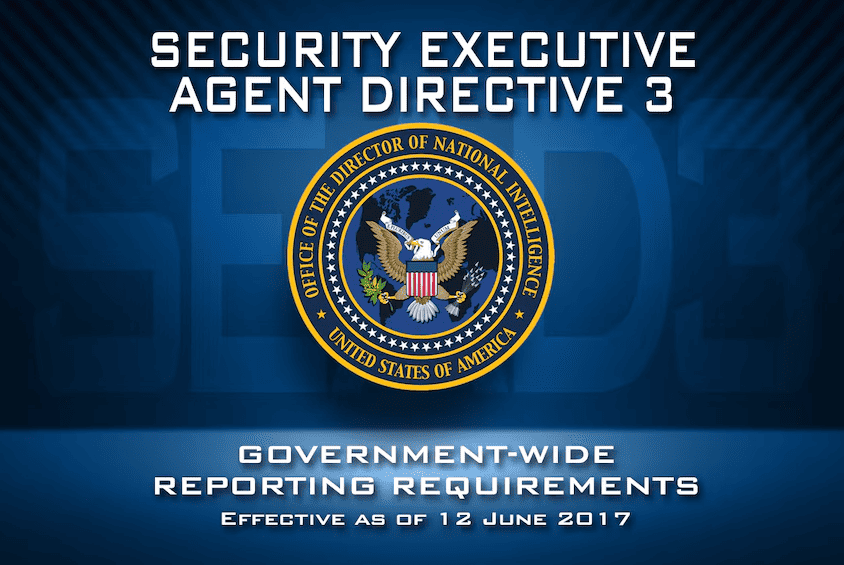
Security Executive Agent Directive 3 (SEAD-3)
SEAD-3 establishes the federal personnel security reporting requirements for individuals with access to classified information or who hold sensitive national security positions.
For cleared contractors, Facility Security Officers (FSOs), insider threat program managers, and security teams, understanding SEAD-3 is critical for:
- maintaining compliance,
- supporting adjudicative requirements,
- protecting sensitive information,
- and identifying insider risk indicators early.
Quick Answer: What Is SEAD-3?
SEAD-3 is a U.S. government directive that outlines the requirements for reporting information relevant to personnel security determinations for cleared individuals.
The directive defines:
- what must be reported,
- who must report it,
- and the types of behaviors, activities, foreign contacts, travel, financial issues, and security concerns that may affect an individual’s continued eligibility for access to classified information.
SEAD-3 applies across the executive branch and directly impacts cleared contractors operating under the National Industrial Security Program (NISP).
What Does “SEAD” Mean?
SEAD stands for:
Security Executive Agent Directive
These directives are issued under the authority of the Director of National Intelligence (DNI), who serves as the Security Executive Agent for the federal government.
SEAD directives establish uniform security standards across federal agencies and cleared industry.
Why Was SEAD-3 Created?
Historically, security reporting requirements varied between agencies and organizations. SEAD-3 was created to standardize personnel security reporting expectations across the federal government and cleared industry.
The goal was to improve the government’s ability to:
- identify insider threats,
- detect foreign intelligence targeting,
- evaluate adjudicative concerns,
- and respond to potential security risks earlier.
Who Must Comply with SEAD-3?
SEAD-3 primarily applies to:
- individuals holding security clearances,
- personnel in sensitive national security positions,
- federal employees,
- military personnel,
- and cleared contractor personnel.
For cleared industry, this includes:
- defense contractors,
- subcontractors,
- cleared consultants,
- research institutions,
- aerospace organizations,
- and other organizations operating under the NISP.
Facility Security Officers (FSOs) and insider threat program personnel are often responsible for helping administer SEAD-3 reporting workflows within their organizations.
What Types of Information Must Be Reported Under SEAD-3?
SEAD-3 identifies a wide range of reportable information that may impact personnel security eligibility.
Examples can include:
- foreign travel,
- foreign contacts,
- suspicious contacts,
- foreign financial interests,
- arrests,
- criminal conduct,
- substance abuse,
- security violations,
- unauthorized disclosures,
- financial problems,
- outside employment,
- mental health concerns under certain conditions,
- and activities involving foreign influence or preference.
Why SEAD-3 Matters to Cleared Organizations
For organizations operating within cleared environments, SEAD-3 is more than a compliance requirement.
It directly impacts:
- personnel security,
- insider threat programs,
- inspection readiness,
- operational security,
- and organizational risk management.
Failure to properly manage SEAD-3 reporting obligations can contribute to:
- DCSA findings,
- incomplete personnel records,
- delayed reporting,
- security vulnerabilities,
- and reduced visibility into insider risk indicators.
Common SEAD-3 Reporting Categories
Foreign Travel
Cleared personnel are often required to report certain foreign travel, including travel details, contacts, and post-travel information.
Suspicious Contacts
Personnel must report contacts, interactions, or behaviors that could indicate:
- foreign intelligence targeting,
- elicitation,
- recruitment attempts,
- or unauthorized information collection.
Foreign Financial Interests
Foreign bank accounts, investments, property, or financial ties may require reporting depending on the circumstances.
Criminal Conduct
Arrests, charges, or legal issues can impact eligibility determinations and may require timely reporting.
Security Violations
Incidents involving mishandling of classified or sensitive information may trigger reporting obligations.
Insider Risk Indicators
Behavioral or operational indicators suggesting potential insider threat activity may require further review and reporting.
SEAD-3 and Insider Threat Programs
SEAD-3 is closely tied to insider threat and personnel security programs.
Many of the behaviors and activities identified within SEAD-3 overlap with:
- insider threat indicators,
- foreign influence concerns,
- operational security issues,
- and adjudicative risk factors.
As a result, organizations increasingly seek ways to operationalize SEAD-3 reporting within broader insider risk management workflows, such as:
- centralized reporting systems,
- audit trails,
- workflow automation,
- case management,
- reporting dashboards,
- and cross-functional visibility between security, HR, legal, and leadership teams.
SEAD-3 and NISPOM
Organizations operating under the National Industrial Security Program Operating Manual (NISPOM) must often integrate SEAD-3 reporting requirements into their overall security program.
DCSA inspections and security reviews may evaluate whether organizations maintain:
- effective insider threat reporting processes,
- employee reporting mechanisms,
- training programs,
- and documentation practices.
Organizations that lack centralized or mature reporting workflows may struggle with:
- inspection readiness,
- reporting consistency,
- and defensible documentation.
Challenges Organizations Face with SEAD-3 Compliance
Many organizations encounter operational difficulties when managing SEAD-3 requirements, including:
- decentralized reporting processes,
- inconsistent documentation,
- delayed reporting,
- limited visibility into employee disclosures,
- lack of auditability,
- fragmented workflows,
- insufficient trend analysis,
- and difficulty correlating multiple risk indicators.
These challenges become more significant as organizations scale.
How Organizations Operationalize SEAD-3
Modern organizations increasingly move away from manual reporting workflows toward centralized insider risk and security management platforms.
Operational approaches often include:
- digital reporting forms,
- centralized employee dossiers,
- workflow tracking,
- foreign travel management,
- suspicious contact reporting,
- automated notifications,
- analytics dashboards,
- and inspection-ready documentation.
The goal is not only compliance, but improved operational visibility into personnel security risk.
Frequently Asked Questions About SEAD-3
Is SEAD-3 only for government employees?
No. SEAD-3 also applies to cleared contractor personnel operating under federal security requirements.
Does SEAD-3 apply to all employees?
Generally, SEAD-3 applies to individuals holding security clearances or occupying sensitive national security positions.
What happens if reportable information is not reported?
Failure to report required information can result in:
- security concerns,
- clearance issues,
- compliance findings,
- or administrative action depending on the circumstances.
Is SEAD-3 part of NISPOM?
SEAD-3 and NISPOM are separate authorities, but they are closely interconnected operationally within cleared industry security programs.
Why is suspicious contact reporting important?
Suspicious contact reporting helps organizations and the government identify potential foreign intelligence targeting, elicitation, recruitment efforts, or insider risk concerns.
Strengthening SEAD-3 Reporting Workflows
As insider risk and foreign influence concerns continue to evolve, organizations increasingly seek ways to improve:
- reporting visibility,
- workflow consistency,
- documentation,
- and operational awareness.
Modern insider risk and personnel security programs often combine the following to support both organizational security and regulatory obligations:
- compliance,
- counterintelligence awareness,
- and centralized reporting workflows
351X – SEAD-3 Reporting SaaS by IXN
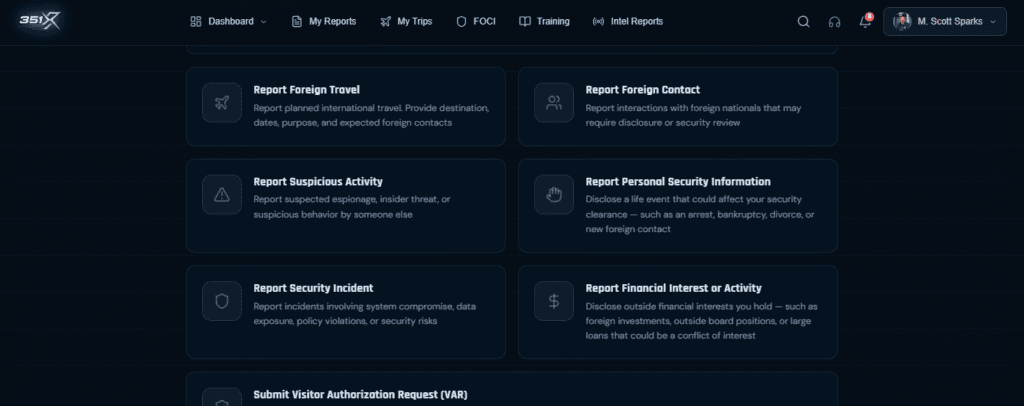
351X is a SOC 2 Type 2 attested, patent-pending SaaS platform built for FSOs, ISSMs, and Insider Threat Program Officials managing NISPOM and SEAD-3 compliance. It unifies employee reporting, CI-based risk scoring, foreign travel management, and suspicious activity tracking in a single secure workflow, purpose-built for cleared defense contractors.
About IXN Solutions
IXN Solutions provides training and counterintelligence-driven insider risk, personnel security, and operational security services for cleared industry, critical infrastructure, research, and enterprise organizations.
Learn more about:
- insider risk program support,
- SEAD-3 operational workflows,
- security assessments,
- and 351X insider risk management solutions.
Last Updated: 11 May 2026