
DEFENSE INDUSTRIAL BASE SECURITY
What is NISPOM?
Understanding the National Industrial Security Program Operating Manual (NISPOM)
The National Industrial Security Program Operating Manual (NISPOM) establishes the security requirements that cleared contractors must follow to protect classified information, comply with federal security regulations, and safeguard national security programs. Understanding NISPOM is essential for Facility Security Officers (FSOs), security professionals, and organizations operating within the Defense Industrial Base (DIB).
National Industrial Security Program Operating Manual (NISPOM)
What is NISPOM? The National Industrial Security Program Operating Manual (NISPOM) establishes the security requirements that cleared contractors must follow to protect classified information while supporting U.S. Government contracts.
For Facility Security Officers (FSOs), security managers, insider threat program personnel, and executive leadership, understanding NISPOM is essential for:
- maintaining a compliant industrial security program,
- protecting classified information and controlled assets,
- meeting DCSA inspection requirements,
- implementing effective insider threat and foreign travel programs,
- and reducing organizational security risk.
Who Must Comply with NISPOM?
NISPOM applies to U.S. organizations that have been granted a Facility Clearance (FCL) and perform classified work on behalf of the U.S. Government. Compliance is required for contractors supporting the Department of Defense and other federal agencies that sponsor classified contracts.
Organizations commonly subject to NISPOM include:
- Defense contractors
- Aerospace and aviation companies
- Technology and cybersecurity firms
- Engineering and manufacturing organizations
- Research institutions and laboratories
- Organizations supporting intelligence or national security programs
Within these organizations, Facility Security Officers (FSOs), Insider Threat Program Senior Officials (ITPSOs), security managers, executive leadership, and cleared employees all play important roles in maintaining compliance.
Core Security Pillars
🛡 Personnel Security
🏢 Physical Security
💻 Information System Security
🎓 Security Education
🚩 Insider Threat Program
🌍 Foreign Travel & Foreign Contacts
Why NISPOM Matters
Organizations that successfully implement NISPOM:
✓ Protect classified information
✓ Reduce insider threat risk
✓ Prepare for DCSA Security Reviews
✓ Meet contractual security obligations
✓ Strengthen organizational resilience
✓ Build trust with government customers
Key Security Requirements
NISPOM establishes the baseline requirements for protecting classified information throughout an organization’s operations. While requirements vary depending on the nature of the contract and facility, most cleared contractors must implement controls in areas such as:
- Personnel Security Clearances
- Insider Threat Program management
- Classified information safeguarding
- Foreign travel and foreign contact reporting
- Physical security and access controls
- Information systems security
- Incident reporting and self-inspections
- Security education and employee awareness
Together, these requirements help organizations reduce security risk while demonstrating compliance during DCSA Security Reviews.
How NISPOM Relates to Insider Threat and SEAD-3
NISPOM establishes the security framework that cleared contractors must implement, while Security Executive Agent Directive 3 (SEAD-3) defines many of the reporting responsibilities for cleared personnel.
Organizations must not only establish Insider Threat Programs required by NISPOM but also ensure employees understand when and how to report foreign contacts, foreign travel, suspicious activities, financial concerns, arrests, and other reportable information described in SEAD-3.
Effective compliance requires policies, training, reporting processes, and technology that work together, not simply checking regulatory boxes.
Common Compliance Challenges
Many organizations struggle with translating regulatory requirements into practical security programs. Common challenges include:
- Building an effective Insider Threat Program
- Developing compliant foreign travel procedures
- Keeping policies and SOPs current
- Training employees on reporting obligations
- Preparing for DCSA Security Reviews
- Managing documentation and evidence of compliance
- Identifying organizational exposure before inspections
Organizations that address these challenges proactively are generally better positioned during inspections and reduce overall organizational security risk.
How IXN Helps Organizations Meet NISPOM Requirements
IXN Solutions helps organizations move beyond basic compliance by developing security programs that are practical, sustainable, and aligned with real-world counterintelligence threats.
Our services and solutions include:
- Counterintelligence Exposure Assessments
- Insider Threat Program consulting
- Foreign Travel Security Program Kits
- 351X Insider Risk Management Platform
- Security awareness training
- Executive advisory services
Whether you’re standing up a new security program or strengthening an existing one, IXN provides the operational expertise and technology to help your organization meet NISPOM requirements with confidence.
Frequently Asked Questions About NISPOM
What is NISPOM?
The National Industrial Security Program Operating Manual (NISPOM) establishes the security requirements that cleared contractors must follow to protect classified information while performing work for the U.S. Government. NISPOM is codified in 32 CFR Part 117 and is administered by the Defense Counterintelligence and Security Agency (DCSA).
Who is required to comply with NISPOM?
Organizations that possess or are seeking a Facility Clearance (FCL) to perform classified government contracts must comply with NISPOM. This includes defense contractors, aerospace companies, technology firms, research organizations, and other businesses participating in the Defense Industrial Base (DIB).
What topics does NISPOM cover?
NISPOM provides requirements for nearly every aspect of industrial security, including:
- Personnel security
- Facility security
- Classified information handling
- Information system security
- Insider threat programs
- Security education and training
- Foreign travel and foreign contacts
- Reporting requirements
- Security reviews and inspections
Together, these requirements help organizations protect classified information from espionage, insider threats, and unauthorized disclosure.
Is NISPOM the same as SEAD-3?
No. NISPOM and SEAD-3 serve different purposes but work together.
NISPOM establishes the overall security requirements for cleared contractors, while Security Executive Agent Directive 3 (SEAD-3) defines the personnel security reporting requirements for individuals with access to classified information. Organizations typically implement SEAD-3 reporting procedures as part of their broader NISPOM compliance program.
How can organizations prepare for a DCSA Security Review?
Organizations can improve their readiness by maintaining current security policies, conducting regular self-assessments, training employees on security responsibilities, documenting required reporting processes, and routinely reviewing compliance with NISPOM requirements. Many organizations also conduct independent security assessments to identify compliance gaps before an official DCSA Security Review.
Related Resources
Continue exploring industrial security and insider threat topics:
- What is SEAD-3?
- Foreign Travel Security Program Kit
- CI Exposure Snapshot
- CI Exposure Assessment
- Enterprise CI Engagement
- 351X Insider Risk Management Platform
- Insider Threat Consulting Services
- Theory to Practice (T2P) Insider Risk Training
351X SaaS by IXN
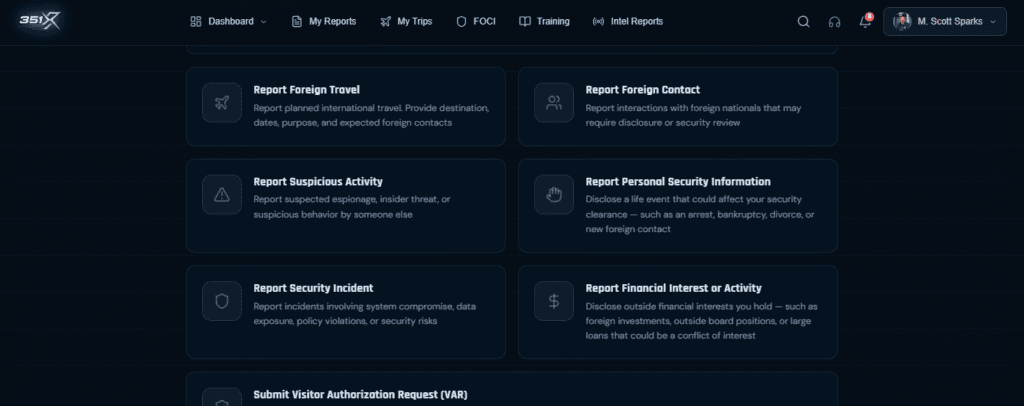
351X is a SOC 2 Type 2 attested, patent-pending SaaS platform built for FSOs, ISSMs, and Insider Threat Program Officials managing NISPOM and SEAD-3 compliance. It unifies employee reporting, CI-based risk scoring, foreign travel management, and suspicious activity tracking in a single secure workflow, purpose-built for cleared defense contractors.
About IXN Solutions
IXN Solutions provides training and counterintelligence-driven insider risk, personnel security, and operational security services for cleared industry, critical infrastructure, research, and enterprise organizations.
Learn more about:
- insider risk program support,
- SEAD-3 operational workflows,
- security assessments,
- and 351X insider risk management solutions.
Last Updated: 8 July 2026